Laser Cutting and Punching
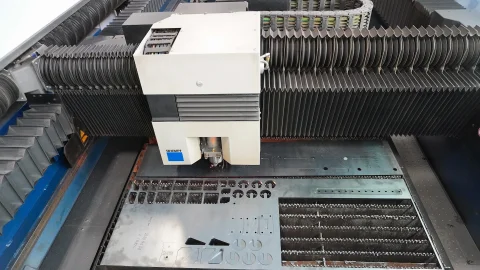
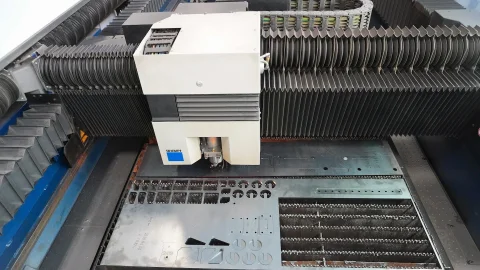
We manufacture precision parts using advanced laser cutting technologies, designed for further processing. Our equipment enables fast and clean cutting of even complex-shaped components with high repeatability and tight tolerances. Thanks to the integration of our machines with an automated storage system, the entire process is highly efficient, ensuring maximum material utilization and minimal waste.
Flat laser cutting forms the fundamental step for subsequent technologies such as CNC sheet metal bending, tube bending, CNC machining of details or welding of assemblies. The cut parts subsequently undergo surface finishing and are completed within assembly. Our tool shop ensures the production of special fixtures to achieve maximum precision.
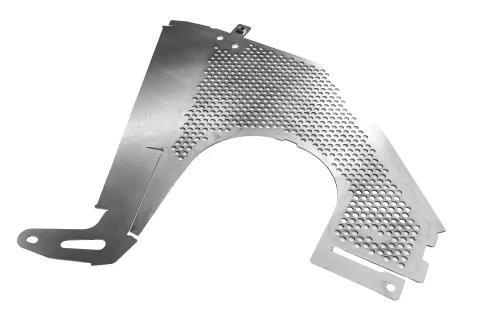
Laser cutting is ideal for structural parts, covers, frames and design elements. We process steel, stainless steel, copper, brass and aluminum, ensuring high quality and fast production.
List of Machines
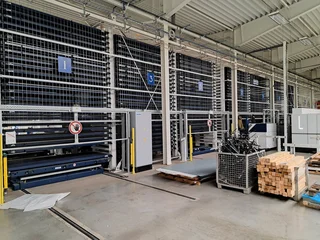
The STOPA warehouse and stocking system
Automated storage system for 1500 mm x 3000 mm sheet bundles, which has a total of 467 storage positions.
The entire system is completely digitally connected to the planning software…
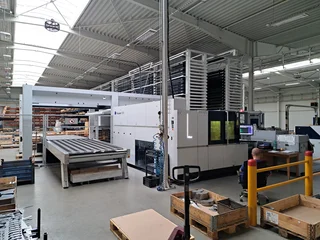
TRUMPF L5030 6 kW CNC fiber laser cutting machine
High‑performance laser system for fast and precise sheet metal cutting across a wide range of materials.- Laser power: 6 kW, semi‑automated with part removal
- Max. material…
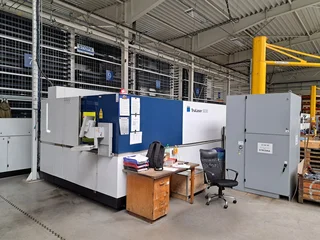
TRUMPF L5030 5 kW fiber - Industrial Laser Cutting
Reliable laser system for precise cutting across a wide range of metal materials.- Laser power: 5 kW
- Max. material thickness: 25 mm steel, 15 mm stainless steel, 10 mm…
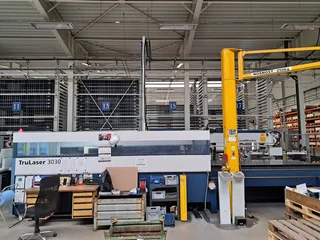
TRUMPF L3030 3.2 kW CO - 2D Laser Cutting of Sheet Metal
Reliable CO₂ laser for high‑quality cutting of steel, stainless steel and aluminium.- Laser power: 3.2 kW CO₂
- Max. material thickness: 20 mm steel, 12 mm stainless steel, 8…
Photogallery
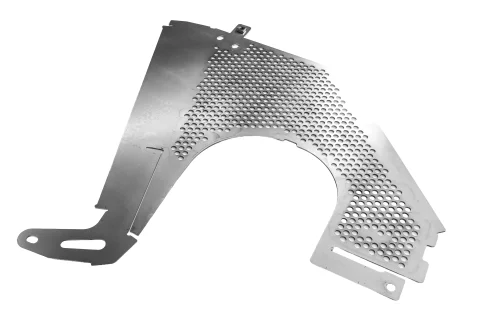
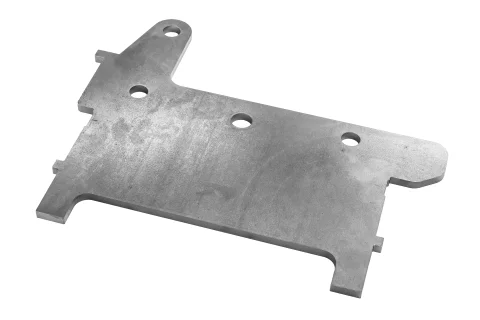
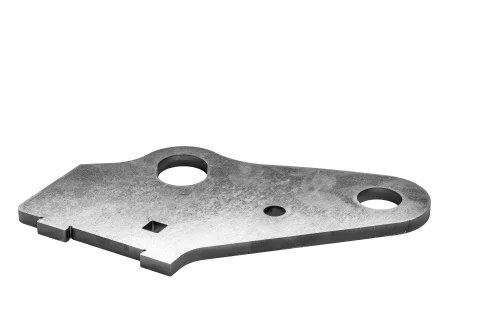
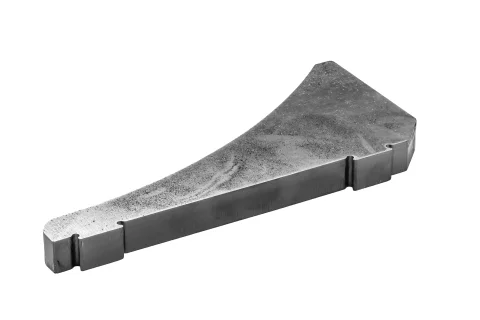
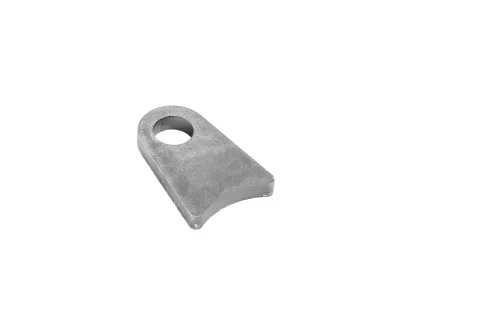
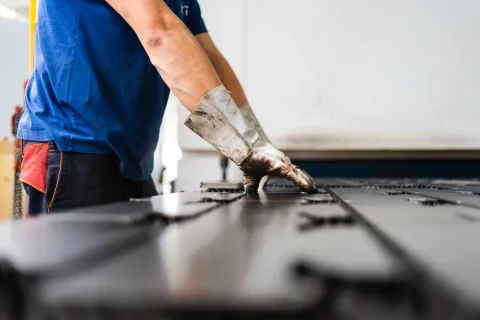
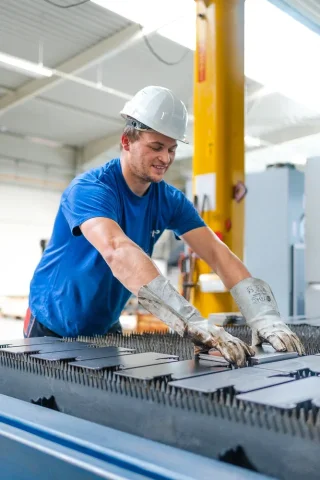
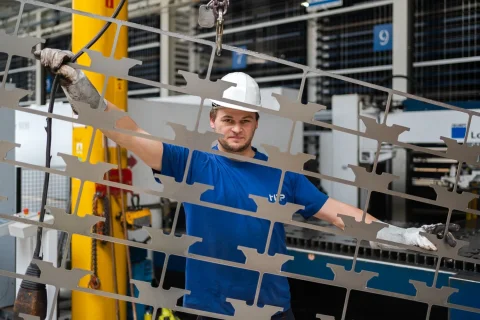
High-quality products
are standard
At HTP, we consider quality a standard, not an added benefit. At the same time, we recognize a key factor of custom manufacturing - competitive pricing. That is why we systematically seek the right balance between technical precision, speed and cost efficiency.
Across all areas, we apply the principles of lean manufacturing and continuous improvement. We optimize processes, shorten lead times and eliminate waste - without compromising quality and delivery reliability.
The result is high-quality, technically precise products delivered quickly, efficiently and at a fair price.
Why choose HTP for laser cutting
Advanced laser technologies
Fast and high-quality production
Processing of all materials
Automated storage system
FAQ
Depending on the laser source, material type, and thickness, the technology can be used for both thin and thicker sheet metal as well as for complex-shaped components. The correct combination of laser power, cutting speed, and assist gas ensures high edge quality and consistent results, making laser cutting suitable for structural parts, covers, frames, and other precision sheet metal components.
For thinner sheets, laser cutting provides high precision, clean edges, and excellent repeatability. As material thickness increases, the process requires higher laser power, optimized cutting speeds, and the appropriate assist gas. The choice between fiber and CO₂ laser technology is therefore made according to the material, thickness, required cut quality, and production requirements.
One limitation is the relationship between material thickness and cutting speed. Laser cutting is extremely productive for thin and medium-thickness sheet metal, while processing thicker materials generally requires more laser power, lower cutting speeds and higher consumption of cutting gases. For very thick plates or applications where extremely high cutting accuracy is not required, other technologies may sometimes be more economical.
Laser cutting is also a thermal cutting process. The concentrated laser beam heats the material locally until it melts or vaporizes, which creates a heat-affected zone along the cut edge. With correctly selected parameters this effect is very small, but it cannot be eliminated completely. Depending on the material, thickness and cutting conditions, minor discoloration, oxidation, burr formation or changes to the cut edge may occur. Components with particularly demanding functional or visual requirements may therefore require additional machining or surface finishing.
Another factor is the type of material. Different metals absorb laser energy differently and therefore require different laser sources, cutting gases and process parameters. Modern fiber lasers are particularly effective for processing steel, stainless steel and aluminum and can also process reflective non-ferrous metals such as copper and brass when the appropriate technology is used. HTP combines fiber and CO₂ laser technologies, allowing the cutting process to be selected according to the material and application.
For some high-volume applications involving a large number of identical holes or standard geometries, CNC punching can be more economical than laser cutting. Punching uses physical tooling and can produce repetitive holes and certain formed features very quickly. Laser cutting, on the other hand, offers significantly greater flexibility because changing the component geometry normally does not require manufacturing a new physical tool.
The operating costs of laser cutting must also be considered. These include electrical energy, cutting gases, consumable components and regular maintenance of the optical and cutting systems. However, modern automation can significantly improve overall manufacturing efficiency. At HTP, laser machines are integrated with an automated STOPA material storage system, helping to streamline material handling, improve machine utilization and reduce unnecessary manual operations.
For this reason, the most economical solution is not determined by the laser alone. At HTP, laser cutting is integrated into a complete manufacturing chain that can include CNC sheet metal bending, machining, welding, surface finishing and assembly. This makes it possible to optimize the complete component rather than only the individual cutting operation.
Unlike laser cutting, where the contour is created by a focused laser beam, punching is a mechanical process. The machine uses interchangeable punches and dies with defined geometries. The sheet is accurately positioned underneath the punching head and the programmed features are produced one after another according to the digital manufacturing data.
CNC punching is particularly effective for sheet metal parts containing a large number of repetitive holes, slots or standard shapes. Once the appropriate tooling is available, individual punching operations can be performed extremely quickly. This makes the technology attractive for serial production of components such as enclosures, covers, electrical cabinets, brackets, panels, ventilation components and structural sheet metal parts.
Another advantage is that punching machines can perform operations that conventional laser cutting cannot perform in the same way. Depending on the machine and available tooling, punching can be used not only to separate material but also to create certain formed features directly in the sheet. These may include embossments, louvers, countersinks or other functional geometries. Several manufacturing operations can therefore be incorporated into a single production stage.
The main difference between CNC punching and laser cutting is flexibility. A laser can follow almost any programmed two-dimensional contour without requiring a dedicated cutting tool for that geometry. This makes laser cutting highly suitable for complex shapes, prototypes, small batches and frequently changing components. Punching requires suitable physical tooling, but it can be extremely productive where the same geometries are repeated many times.
The two technologies can therefore complement each other. In sheet metal fabrication, the optimal process is selected according to part geometry, material thickness, required production volume and subsequent operations. Combined punch-laser systems take this principle even further by combining the productivity and forming capabilities of punching with the geometrical flexibility of laser cutting within one production system.
Modern CNC laser cutting machines are capable of very high positioning accuracy and repeatability. In practical sheet metal production, dimensional tolerances are commonly measured in tenths of a millimeter, but the tolerance that can actually be guaranteed for a specific component must always be evaluated according to its drawing and manufacturing conditions. Thin sheet and simple geometries can generally be produced more accurately than very thick material or components containing long, narrow or thermally sensitive features.
It is also important to distinguish between machine positioning accuracy and finished-part tolerance. The accuracy specified for the movement of a CNC machine does not automatically represent the dimensional tolerance of the finished component. The final dimensions can also be influenced by the width of the laser kerf, heat input, material flatness, residual stress in the sheet, material composition and the behaviour of the component after it has been released from the surrounding sheet.
Material thickness is an important factor. As thickness increases, the cutting process becomes more demanding and cutting speed, laser power and gas parameters have a greater influence on the quality and geometry of the cut. The same numerical tolerance therefore cannot automatically be guaranteed for a thin stainless-steel cover and a thick structural-steel component.
At HTP, different laser technologies are available for different production requirements. The TRUMPF L5030 6 kW fiber processes sheets up to 1500 × 3000 mm and is specified by HTP for steel up to 20 mm, stainless steel up to 15 mm and aluminum up to 10 mm. The TRUMPF L5030 5 kW fiber also processes sheets up to 1500 × 3000 mm and is specified for steel up to 25 mm, stainless steel up to 15 mm and aluminum up to 10 mm. The TRUMPF L3030 3.2 kW CO₂ is specified for steel up to 20 mm, stainless steel up to 12 mm and aluminum up to 8 mm. The appropriate machine and cutting parameters can therefore be selected according to the material and component requirements.
For components requiring especially tight functional tolerances, laser cutting can also serve as the highly accurate initial manufacturing stage followed by CNC machining of critical surfaces, holes or other dimensional features. This combination makes it possible to use the productivity of laser cutting while achieving tighter tolerances where they are functionally required.
For this reason, the required dimensional tolerances should ideally be specified directly in the technical drawing. HTP can then evaluate the material, thickness, geometry and subsequent production processes and select the most appropriate manufacturing method for the component.
In industrial sheet metal laser cutting, the most common materials are carbon steel, stainless steel and aluminum. Modern fiber laser systems can also process non-ferrous and highly reflective metals such as copper and brass when the machine and cutting process are designed for these materials.
At HTP, the laser cutting process is focused specifically on metal fabrication. We process steel, stainless steel, aluminum, copper and brass, selecting the appropriate technology and process parameters according to the particular material, thickness and component geometry.
The HTP machine park combines fiber and CO₂ laser technology. The TRUMPF L5030 fiber machines provide efficient processing of a wide range of metallic materials, while the TRUMPF L3030 CO₂ laser provides an additional option for steel, stainless steel and aluminum. This combination gives greater flexibility when selecting the appropriate process for different sheet metal applications.
However, not every material is suitable for conventional industrial laser cutting. Certain plastics, composites and materials containing potentially hazardous chemical compounds may release toxic or corrosive gases when heated and therefore should not be processed unless a laser system is specifically designed for them. Other materials may melt, burn, crack, delaminate or produce an unacceptable edge instead of creating a controlled cut.
Coated, laminated or composite materials must also be evaluated individually because the base material and coating can react differently to laser energy. The presence of protective films, surface coatings or several different material layers can affect cutting quality, process stability and safety.
Highly reflective metals deserve special consideration. Copper and brass were historically more difficult to process using some laser technologies because they reflect a significant proportion of the incident laser energy. Modern fiber laser technology has greatly expanded the possibilities for cutting these materials. HTP therefore includes both copper and brass among the metals processed using its laser cutting technologies.
Material thickness is another limitation. A metal may be technically suitable for laser cutting but still exceed the useful cutting capacity of a particular machine. The maximum thickness therefore depends not only on the material itself but also on the laser source, available power, required cut quality and machine configuration.
For industrial production, the correct question is therefore not simply whether a material “can be cut by a laser,” but whether it can be processed safely, repeatedly, economically and at the required quality. The material grade, thickness, sheet dimensions, drawing requirements and subsequent manufacturing operations should all be considered when selecting the appropriate laser cutting technology.
Handling
equipment
We supply parts for electric trucks, AGV systems, and sorting technology. Our components support automation and efficient logistics.
MoreConstruction machinery
We manufacture parts for construction equipment – from dumpers to finishers. Our components can withstand even the most demanding conditions.
MoreAgriculture
We manufacture parts for tractors, harvesting machines, and milking equipment. Our components stand up to demanding conditions.
MoreMedical, laboratory, and office equipment
We supply parts for medical technology, aesthetic medicine, and laboratory equipment. Our components meet strict hygiene standards.
More
Municipal
equipment
We supply parts for sweepers and equipment for maintaining public spaces. Our components help ensure cleanliness and efficiency in the municipal sector.
More
Building components
and building equipment
We manufacture components for automatic doors, turnstiles, and technical equipment for buildings. Our solutions combine functionality and design.
MoreAutomotive
We supply components for trucks, vans, and interior fittings. Our parts meet strict quality and safety requirements.
More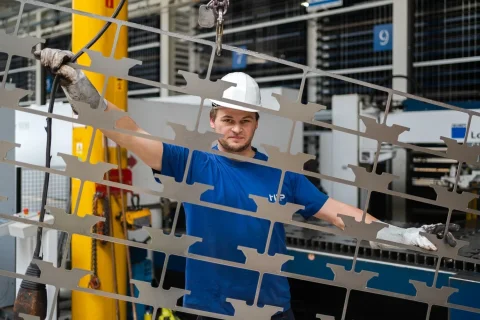
Laser Cutting & Sheet Metal Fabrication
We provide precision laser cutting and sheet metal fabrication for industrial companies requiring reliable production, high accuracy and consistent quality. Using advanced CNC laser technologies and automated material handling, we manufacture complex sheet metal components with tight tolerances and efficient material utilization.Our production capabilities cover the complete process from sheet metal cutting to further processing, including CNC bending, machining, welding, surface treatment and assembly. This allows us to deliver finished components and assemblies tailored to the specific requirements of each customer – from prototypes and individual parts to series production.
Precision laser cutting for industrial applications
Modern fiber and CO₂ laser technologies enable fast and accurate processing of a wide range of materials, including steel, stainless steel, aluminum, copper and brass. Our machines ensure clean cutting edges, excellent repeatability and reliable quality even for complex geometries.Laser cutting is suitable for various industrial applications such as machine components, covers, frames, housings, brackets and structural parts. Thanks to automated storage and digital production management, we optimize material usage, reduce waste and maintain efficient production workflows.
Custom manufacturing for demanding industries
We manufacture sheet metal components for a wide range of industrial sectors, including engineering, automation, machinery production and other technical industries. Our combination of modern technologies, skilled specialists and continuous process improvement enables us to deliver products that meet demanding requirements for precision, durability and cost efficiency.Whether you need individual laser-cut parts or complete sheet metal assemblies, HTP provides a flexible manufacturing solution based on your technical specifications and production needs.
Laser cutting is often the first step in a complete manufacturing process. The cut components can be further processed through CNC sheet metal bending, machining, welding and assembly to create fully finished products ready for integration into customer projects.
Our experienced team supports customers throughout the entire production cycle – from technical consultation and preparation of manufacturing data to final inspection and delivery. We work with companies looking for a long-term manufacturing partner capable of handling both small batches and large-scale production.